Last Updated: August 2026
Published by: Saif Pharma — a specialist oncology medicine supplier serving patients, pharmacies, and distributors worldwide.
Medical Review: Reviewed by Dr. Rakib Uddin Ahmed, MBBS, MD (Hematology)
Content Basis: This article is based on official prescribing information, product monographs, and regulatory product documentation from SFDA and DGDA (Directorate General of Drug Administration, Bangladesh).
Sources: drugs.com, drugs.com, accessdata.fda.gov, accessdata.fda.gov, accessdata.fda.gov

Key Takeaways
- Olaparib is an oral PARP inhibitor that blocks DNA repair in cancer cells, including BRCA-mutated tumors, leading to cancer cell death.
- It is indicated for deleterious or suspected deleterious germline BRCA-mutated advanced ovarian cancer in adult patients aged 18 years and older who have had three or more prior lines of chemotherapy, as well as for platinum-sensitive relapsed ovarian cancer.
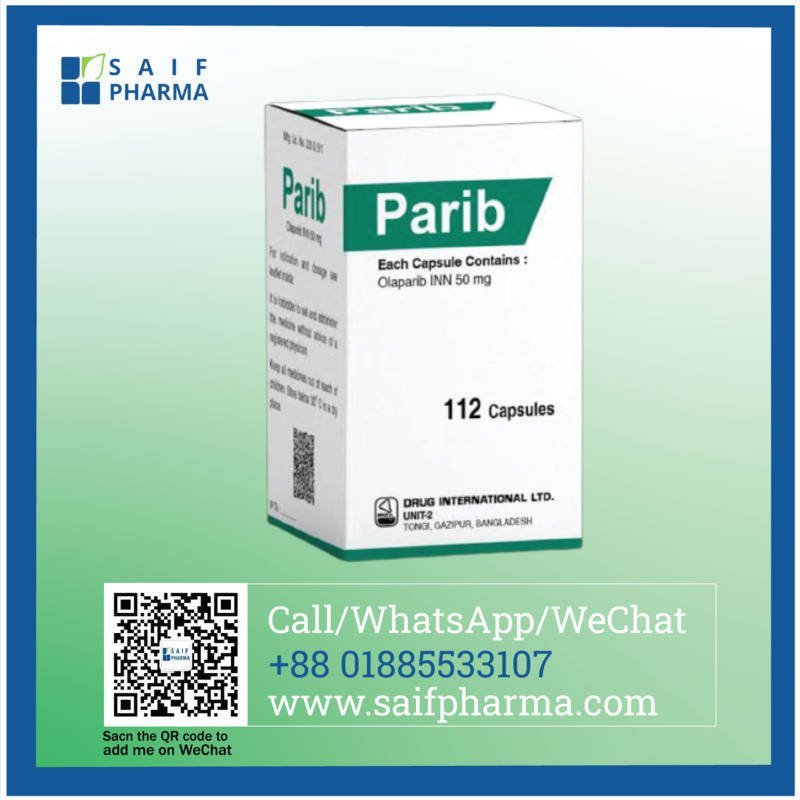
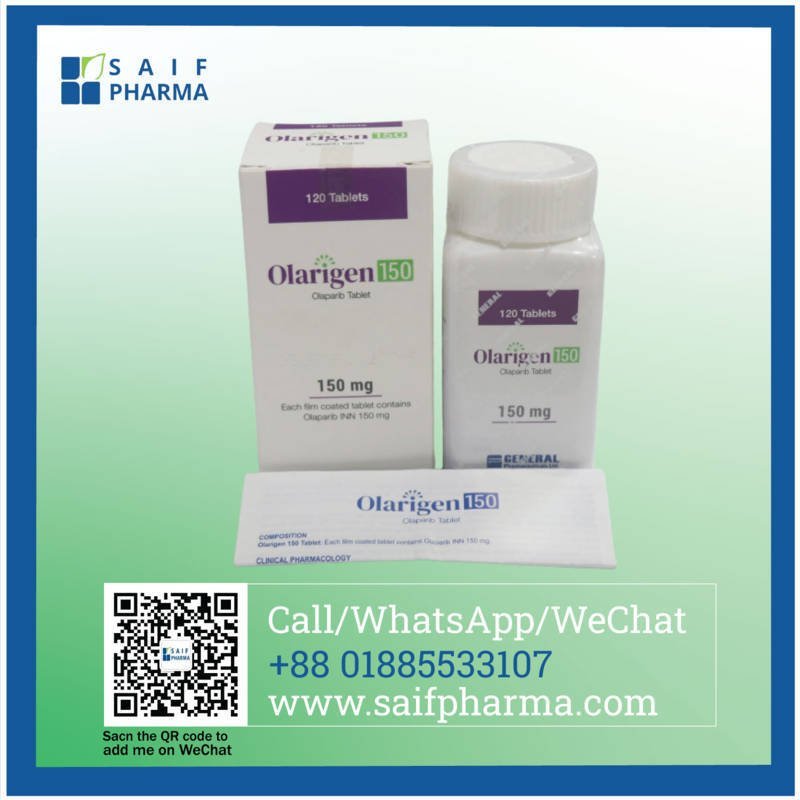
- Bangladeshi-manufactured brands supplied include Olakin, Inpoza, Olarigen, Olaparib, Parib, and Olanib, available in 50 mg capsule, 100 mg tablet, and 150 mg tablet forms.
- Common side effects include tiredness, nausea, diarrhea, loss of appetite, dizziness, headache, and indigestion, while serious risks include myelodysplastic syndrome/acute myeloid leukemia, pneumonitis, embryo-fetal toxicity, and hypersensitivity reactions.
- Institutions and distributors importing olaparib into Saudi Arabia must ensure SFDA registration requirements are met, including GMP certification and certificates of pharmaceutical product.
- Export supply is structured with cold-chain logistics and full documentation to support bulk and distributor-level procurement across Saudi Arabia and the GCC region.
Product Overview / About Olaparib
Olaparib is an oral antineoplastic agent belonging to the Poly (ADP-ribose) polymerase (PARP) inhibitor therapeutic class. As a PARP inhibitor, olaparib works by blocking the PARP enzyme responsible for repairing single-strand DNA breaks within cancer cells, including those harboring BRCA gene mutations. This inhibition prevents effective DNA repair, causing accumulated damage that leads to cancer cell death, a mechanism often referred to as synthetic lethality in BRCA-mutated tumors.
As a Bangladeshi pharmaceutical supplier, we source and supply olaparib exclusively through Bangladeshi-manufactured brands. Our portfolio includes Olakin, Inpoza, Olarigen, Olaparib, Parib, and Olanib. Olanib is manufactured by Everest Pharmaceuticals Ltd., a Bangladesh-based pharmaceutical manufacturer, and is available in 50 mg and 150 mg capsule strengths. Additional brands in our supply network are produced by established Bangladeshi manufacturers including Ziska Pharmaceuticals and Genvio Pharma, offering procurement teams multiple sourcing options for the same molecule.
Olaparib is available in three dosage forms: 50 mg capsule, 100 mg tablet, and 150 mg tablet. This range of forms and strengths allows healthcare institutions and pharmacies to select the appropriate presentation based on physician prescribing requirements. Each Bangladeshi brand listed above is manufactured under regulated pharmaceutical production standards and is intended for export supply to international markets, including Saudi Arabia, rather than for in-country manufacture. Buyers seeking a reliable, documented supply chain for oncology-grade olaparib can rely on our sourcing network for consistent product availability across these approved dosage forms.
Our team’s understanding of olaparib’s mechanism and regulatory classification is grounded in publicly available prescribing information and internationally recognized oncology references, and this content is reviewed periodically to ensure alignment with current clinical understanding of PARP inhibitor therapy. We encourage procurement professionals and clinical staff to cross-reference any drug information here with official prescribing documentation supplied with each shipment.

Uses / Indications
Olaparib is indicated for the treatment of deleterious or suspected deleterious germline BRCA-mutated advanced ovarian cancer in patients who have received three or more prior lines of chemotherapy. It is also indicated for the treatment of ovarian cancer that has returned following treatment with platinum-based chemotherapy, commonly referenced in clinical practice as platinum-sensitive relapsed ovarian cancer. For the gBRCA-mutated advanced ovarian cancer indication, olaparib is approved for use in adult patients aged 18 years and older.
Clinically, patients considered for olaparib therapy typically undergo BRCA mutation testing to confirm eligibility, given the drug’s mechanism of targeting DNA repair deficiencies specific to BRCA-mutated tumor cells. These effects are generally manageable but should be monitored throughout the treatment course by the prescribing physician.
Serious adverse effects associated with olaparib include myelodysplastic syndrome and acute myeloid leukemia, pneumonitis, embryo-fetal toxicity, and hypersensitivity reactions. Given the embryo-fetal risk, women of reproductive potential require appropriate counseling prior to initiating therapy. Regarding lactation, women are advised to avoid breast-feeding while receiving olaparib therapy and for at least one month following discontinuation of treatment. Institutions managing BRCA-mutated and platinum-sensitive relapsed ovarian cancer cases may also find our resource on Talazoparib as a PARP inhibitor relevant when comparing options within this drug class for procurement planning.
Note: This information addresses approved indications and known safety considerations as a reference for procurement and institutional planning. It is not a substitute for the full prescribing information, and all clinical decisions regarding patient eligibility, monitoring, and management of adverse effects remain the responsibility of the treating oncologist.
Side Effects
Commonly reported side effects of olaparib include tiredness, fatigue, nausea, diarrhea, loss of appetite, dizziness, headache, and indigestion. Patients should be monitored throughout treatment, and any persistent or severe symptoms should be reported to the prescribing physician.
Available Strengths & Brand Variants
Olaparib is supplied in three distinct dosage forms to accommodate varying physician prescribing needs: a 50 mg capsule, a 100 mg tablet, and a 150 mg tablet. Each Bangladeshi-manufactured brand within our supply network is available across these forms, though specific strength availability may vary by brand and manufacturer batch.
Our supplied brand portfolio includes Olakin, Inpoza, Olarigen, Olaparib, Parib, and Olanib. Olanib, manufactured by Everest Pharmaceuticals Ltd., is specifically available in 50 mg and 150 mg capsule strengths. Procurement teams sourcing for pharmacies, hospitals, or distribution networks in Saudi Arabia can request strength-specific availability confirmation for each brand at the time of inquiry.
This multi-brand, multi-strength structure allows buyers flexibility when matching product availability to institutional formulary requirements or physician prescriptions. It is important to note that specific dosing regimens, frequency, and titration schedules are determined solely by the treating physician in accordance with official prescribing information; this section addresses product availability and form only, not dosing guidance. Buyers requiring strength-specific documentation or certificates of analysis for any of the listed brands should reach out through our enquiry channel for verification prior to order placement.

Regulatory Status & Saudi Arabia Import Context
Olaparib as a molecule received its initial regulatory approval from the U.S. FDA in 2014, establishing an international precedent for its use in treating gBRCA-mutated advanced ovarian cancer. This approval history, associated globally with the originator brand Lynparza, provides regulatory background for markets worldwide, though our supply focus remains exclusively on Bangladeshi-manufactured olaparib brands rather than originator-branded product.
For institutions and distributors in Saudi Arabia, oncology drug imports are subject to registration and clearance requirements administered by the Saudi Food and Drug Authority (SFDA, sfda.gov.sa). Importers should ensure that any olaparib brand being brought into the Saudi market carries appropriate manufacturing documentation, certificates of pharmaceutical product (CPP), Good Manufacturing Practice (GMP) certification, and other supporting regulatory files required for SFDA registration and customs clearance of oncology products.
As a Bangladeshi pharmaceutical exporter, our role is to supply Bangladeshi-manufactured olaparib brands—Olakin, Inpoza, Olarigen, Olaparib, Parib, and Olanib—for export to Saudi Arabia and other international destinations. We do not manufacture within Saudi Arabia; all product originates from Bangladesh-based manufacturing facilities and is shipped in compliance with destination market import requirements. Buyers are encouraged to coordinate directly with us regarding documentation needed to satisfy SFDA registration processes for their specific procurement needs. Our internal regulatory affairs team maintains current documentation practices for each supplied brand and stays informed of evolving SFDA requirements affecting oncology product imports.

Export & Supply Capabilities
As a Bangladesh-based pharmaceutical supplier, we specialize in the export of Bangladeshi-manufactured olaparib brands—Olakin, Inpoza, Olarigen, Olaparib, Parib, and Olanib—to healthcare buyers across Saudi Arabia and the broader Gulf Cooperation Council (GCC) region. Our export operations are structured to meet the documentation and compliance expectations of oncology drug procurement, including manufacturing licenses, GMP certifications, certificates of pharmaceutical product, and batch-specific quality documentation required for customs and regulatory clearance in destination markets.
Given the sensitivity of oncology therapeutics, our logistics processes incorporate cold-chain and temperature-controlled handling protocols where applicable, ensuring product integrity for all supplied dosage forms—50 mg capsules, 100 mg tablets, and 150 mg tablets—from origin through to destination pharmacy or institutional storage. This is particularly critical for maintaining product stability during transit to Saudi Arabia and other GCC destinations.
We support both bulk institutional orders and smaller distributor-level procurement, catering to hospital pharmacies, oncology treatment centers, and licensed pharmaceutical distributors. Our supply reliability is built around consistent sourcing directly from Bangladeshi manufacturers, ensuring buyers receive authentic, properly documented product for each of the six supplied brands. For institutions also managing broader oncology portfolios, our related resource on radiation oncotherapy treatment approaches may offer useful context for comprehensive cancer care procurement planning. We do not source, supply, or distribute any brands manufactured outside Bangladesh, ensuring a consistent country-of-origin supply chain for every order fulfilled.
Price / Get Best Price
Pricing for olaparib brands—Olakin, Inpoza, Olarigen, Olaparib, Parib, and Olanib—varies based on several factors, including the specific dosage form (50 mg capsule, 100 mg tablet, or 150 mg tablet), order volume, and final destination market requirements such as those applicable to Saudi Arabia. Because pricing is influenced by shipment size, documentation needs, and logistics arrangements, we do not publish fixed price lists.
Institutional buyers, pharmacies, and distributors seeking current pricing and availability information are encouraged to contact us directly with their specific requirements, including preferred brand, strength, and estimated order quantity. Our team will respond with tailored pricing and supply information based on destination-specific export considerations.
Contact Us / Enquiry Now
Pharmacies, hospital procurement teams, and licensed distributors in Saudi Arabia seeking a dependable source of Bangladeshi-manufactured olaparib brands—Olakin, Inpoza, Olarigen, Olaparib, Parib, and Olanib—are invited to contact our team directly. We support institutional buyers across the full range of available dosage forms, including 50 mg capsules, 100 mg tablets, and 150 mg tablets.
For bulk procurement, please share your required brand, strength, and estimated order volume so we can confirm availability and applicable export documentation. Buyers requiring regulatory files for SFDA registration purposes—including manufacturing licenses, GMP certificates, and certificates of pharmaceutical product—may request these directly through our enquiry channel.
We also accommodate sample requests from qualified pharmaceutical distributors and healthcare institutions evaluating our supplied brands prior to committing to larger orders. Reach out today to discuss your olaparib sourcing requirements, and our team will guide you through documentation, logistics, and order fulfillment for export to Saudi Arabia.
Frequently Asked Questions
What is olaparib used for?
Olaparib is used to treat deleterious or suspected deleterious germline BRCA-mutated advanced ovarian cancer in adult patients who have received three or more prior lines of chemotherapy, as well as ovarian cancer that has returned after platinum-based chemotherapy.
What are the common side effects of olaparib?
Commonly reported side effects include tiredness, fatigue, nausea, diarrhea, loss of appetite, dizziness, headache, and indigestion.
Who can take olaparib for BRCA-mutated ovarian cancer?
Olaparib is approved for use in adult patients aged 18 years and older with confirmed or suspected deleterious germline BRCA-mutated advanced ovarian cancer who have undergone prior chemotherapy treatment.
Can women take olaparib while breastfeeding?
Women are advised to avoid breastfeeding while receiving olaparib therapy and for at least one month after stopping treatment, due to potential risks to the infant.
Which olaparib brands can be sourced for export to Saudi Arabia?
We supply Bangladeshi-manufactured olaparib brands, including Olakin, Inpoza, Olarigen, Olaparib, Parib, and Olanib, for export to Saudi Arabia and other GCC destinations.
What documentation is required to import olaparib into Saudi Arabia?
Importers typically require manufacturing licenses, GMP certification, certificates of pharmaceutical product, and other supporting files needed for SFDA registration and customs clearance, all of which can be requested through our enquiry channel.
- 1. www.drugs.com
- 2. www.drugs.com
- 3. www.accessdata.fda.gov
- 4. www.accessdata.fda.gov
- 5. www.accessdata.fda.gov
Access This Medicine Through Saif Pharma
We are a specialist oncology medicine supplier delivering to patients, pharmacies, hospitals, and distributors worldwide. Contact us for availability and sourcing support.
We do not publish prices online. All pricing is provided directly by our specialist supply team on request.
Medical Information Notice: This content is for informational purposes only and is based on official pharmaceutical product documentation. It does not constitute medical advice. Patients should consult their doctor or pharmacist before taking any medication.
Regulatory Disclaimer: Sourcing and distribution are subject to regional import regulations, quotas, and verified medical prescriptions where applicable. Pricing and availability are subject to change without notice.
Content Currency: This article was last reviewed and updated in August 2026. Regulatory approval statuses and product availability are subject to change; readers are advised to consult official regulatory databases for the most current information.