

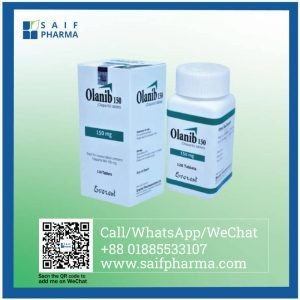
Overview
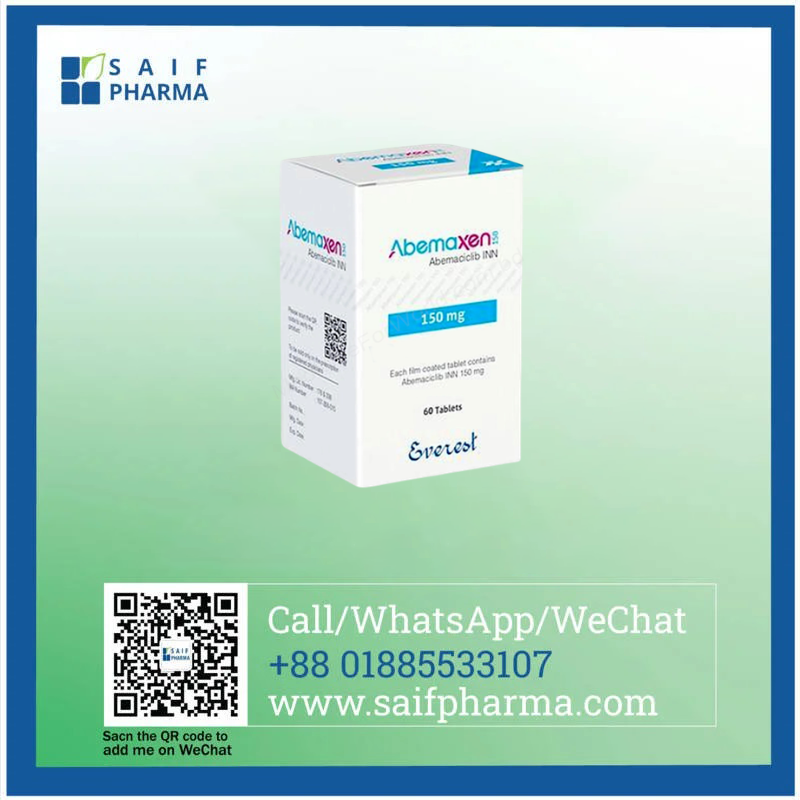
Abemaxen 150 mg contains Abemaciclib, a highly selective and potent inhibitor of cyclin-dependent kinases 4 and 6 (CDK4 and CDK6). Manufactured by Everest Pharmaceuticals Ltd. and supplied globally by Saif Pharma, Abemaxen is a targeted oncology treatment designed to halt the proliferation of cancer cells. It is primarily prescribed for patients with Hormone Receptor-positive (HR+) and Human Epidermal Growth Factor Receptor 2-negative (HER2-) advanced or metastatic breast cancer, offering a critical therapeutic pathway to slow down disease progression.
Therapeutic Applications
Abemaxen is indicated for the following clinical applications in HR+/HER2- breast cancer:
Early Breast Cancer (Adjuvant Treatment): In combination with endocrine therapy (such as tamoxifen or an aromatase inhibitor) for the adjuvant treatment of adult patients with hormone receptor-positive, HER2-negative, node-positive early breast cancer at high risk of recurrence.
Advanced or Metastatic Breast Cancer (Combination Therapy): In combination with an aromatase inhibitor as initial endocrine-based therapy for postmenopausal women, or in combination with fulvestrant for women with disease progression following endocrine therapy.
Metastatic Breast Cancer (Monotherapy): As a single agent for adult patients with disease progression following endocrine therapy and prior chemotherapy in the metastatic setting.
Mechanism of Action
Abemaciclib works at the molecular level by target-blocking the signals that cause cancer cells to divide:
Enzyme Inhibition: It binds to and inhibits the CDK4 and CDK6 enzymes. In healthy cells, these enzymes regulate the cell cycle, but in HR+ breast cancer, they are frequently overactive, causing rapid tumor growth.
Cell Cycle Arrest: By blocking these kinases, Abemaxen prevents the phosphorylation of the Retinoblastoma protein (Rb). This blocks the cell from transitioning from the G1 phase to the S phase of division, effectively freezing cancer cell replication.
Senescence and Apoptosis: The continuous inhibition leads to cellular senescence (permanent growth arrest) or apoptosis (programmed cell death).
Pharmacokinetic Profile
Absorption: Following oral administration, absolute bioavailability is approximately 45%, with peak plasma concentrations typically reached between 4 to 6 hours.
Distribution: Highly plasma protein-bound (~96.3%) with significant tissue distribution, allowing it to exert sustained therapeutic pressure.
Metabolism: Primarily metabolized in the liver by the CYP3A4 enzyme system to active metabolites (M2, M20, and M18) that share similar potency.
Elimination: Excreted predominantly through feces (~81%) and minorly via urine (~5%), with a mean plasma elimination half-life of approximately 18.3 hours.
Dosage & Administration
Combination Therapy Dosing: The standard recommended dose is 150 mg twice daily when taken in combination with endocrine therapy (e.g., fulvestrant or an aromatase inhibitor).
Monotherapy Dosing: The standard dose is 200 mg twice daily when used as a single agent.
Instructions: Tablets must be swallowed whole with water. Do not chew, crush, or split the tablets. It can be taken with or without food but should be taken at roughly the same times every day (12 hours apart).
Missed Doses: If a patient vomits or misses a dose, the next dose should be taken at its regularly scheduled time. Do not take two doses at once.
Clinical Considerations & Safety
Diarrhea Management: Diarrhea is the most common side effect (often occurring within the first month). At the first sign of loose stools, patients should start antidiarrheal therapy (like loperamide) and increase oral fluids.
Neutropenia: Can cause severe decreases in white blood cell counts. Complete Blood Counts (CBC) should be monitored prior to starting therapy and every 2 weeks for the first 2 months.
Hepatotoxicity: Increases in liver enzymes (ALT/AST) are common. Liver function tests must be performed periodically throughout treatment.
Venous Thromboembolism (VTE): Patients should be monitored for signs of deep vein thrombosis (DVT) and pulmonary embolism, such as shortness of breath, chest pain, or leg swelling.
Interstitial Lung Disease (ILD): Monitor for new or worsening respiratory symptoms.
Special Populations
Pregnancy & Lactation: Abemaxen can cause fetal harm. Females of reproductive potential must use effective contraception during treatment and for at least 3 weeks after the final dose. Breastfeeding is not recommended during treatment and for 3 weeks post-dose.
Hepatic Impairment: Dose adjustments (reducing frequency to once daily) are necessary for patients with severe hepatic impairment (Child-Pugh Class