
Last Updated: August 2026
Published by: Saif Pharma — a specialist oncology medicine supplier serving patients, pharmacies, and distributors worldwide.
Medical Review: Reviewed by Dr. Farhan Hossain, MBBS, MD (Oncology)
Content Basis: This article is based on official prescribing information, product monographs, and regulatory product documentation from SFDA and DGDA (Directorate General of Drug Administration, Bangladesh).
Sources: alpha-medicare.com, goodlifeplus.com.bd, drugx.com.bd, drugs.com, drugs.com, drugs.com, drugs.com

Key Takeaways
- Capecitabine is an oral antineoplastic agent (fluoropyrimidine carbamate) that is preferentially activated to fluorouracil within tumor tissue to disrupt cancer cell DNA synthesis.
- It is approved for colorectal cancer and breast cancer in adults aged 18 years and older, with treatment decisions determined by the treating oncologist.
- Capecitabine tablets are available in 150 mg and 500 mg strengths, must be swallowed whole with water, and should not be chewed, crushed, or cut.
- Common side effects include diarrhea, nausea, vomiting, stomatitis, hand-foot syndrome, fatigue, abdominal pain, and anorexia, while serious risks involve altered coagulation parameters and bleeding when combined with coumarin-derivative anticoagulants.
- As a Bangladeshi pharmaceutical exporter, we supply Capcitab, Tysinor, and Capixet — all manufactured in Bangladesh — to pharmacies, hospitals, and distributors in Saudi Arabia in line with SFDA import requirements.
- Our sourcing is exclusively focused on Bangladeshi-manufactured capecitabine brands, ensuring consistent quality oversight and supply chain traceability for institutional buyers.
Capecitabine: Overview and Therapeutic Class
Capecitabine is an antineoplastic agent belonging to the class of fluoropyrimidine carbamates, used in the management of colorectal cancer and breast cancer. As an oral prodrug, capecitabine is preferentially activated to fluorouracil in tumor tissue, allowing targeted cytotoxic activity following administration. This mechanism has established capecitabine as a widely used option within oncology treatment protocols across global markets, including Saudi Arabia.
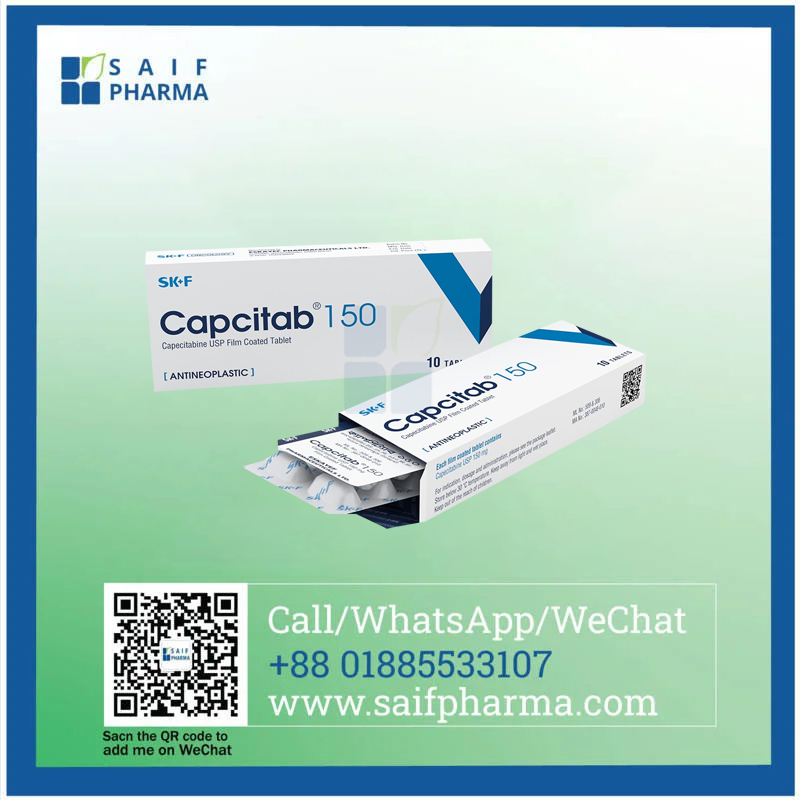
For pharmaceutical buyers and healthcare providers in Saudi Arabia, access to reliable, quality-manufactured capecitabine is essential for consistent cancer care delivery. As a Bangladeshi pharmaceutical supplier, we export capecitabine under the brand names Capcitab, Tysinor, and Capixet — all manufactured in Bangladesh to meet international pharmaceutical manufacturing standards. These brands are formulated as oral tablets and are intended for use within structured oncology treatment settings, under the direction of a qualified treating physician. Our focus remains exclusively on Bangladeshi-manufactured pharmaceutical products, ensuring a consistent and traceable supply chain for institutional and pharmacy buyers evaluating cancer drug capecitabine options for procurement.
This overview reflects publicly available prescribing information and regulatory labeling for capecitabine. It is intended to support procurement and clinical reference purposes and does not replace the official product labeling, which should always be consulted by the treating physician and dispensing pharmacist before clinical use.
Approved Indications: Colorectal and Breast Cancer
Capecitabine is approved for use in two primary oncology indications: colorectal cancer and breast cancer. For colorectal cancer, the approved patient population is adults aged 18 years and older. Capecitabine (Xeloda) is FDA-approved to treat metastatic and advanced-stage breast cancer, typically after other chemotherapy treatments have failed. These indications reflect capecitabine’s role as a systemic antineoplastic therapy within broader oncology treatment planning, including its use as adjuvant capecitabine therapy in appropriate clinical contexts, such as adjuvant capecitabine for breast cancer after preoperative chemotherapy.
Treatment decisions, including patient selection and treatment sequencing, remain the responsibility of the treating oncologist based on individual clinical presentation, disease staging, and the official prescribing information. Procurement teams and healthcare institutions in Saudi Arabia should ensure that capecitabine is sourced in alignment with these approved indications and age parameters to support appropriate clinical use.

Mechanism of Action
Capecitabine functions as a prodrug, meaning it is administered in an inactive form and undergoes enzymatic conversion within the body to become pharmacologically active. Following oral administration, capecitabine is preferentially activated to fluorouracil within tumor tissue itself, rather than being broadly converted throughout systemic circulation. This tumor-tissue-focused activation is central to its design as an oral antineoplastic agent. Once converted, fluorouracil interferes with cancer cell DNA synthesis, disrupting the replication processes that tumor cells rely on for continued growth. This mechanism underlies capecitabine’s classification within the antineoplastic agents therapeutic class and supports its use across approved oncology indications.
This description of capecitabine’s mechanism is derived from established pharmacological literature and product labeling. Prescribers and pharmacists seeking detailed pharmacokinetic data should refer to the full prescribing information for the specific product being dispensed.
Available Forms and Product Specifications
Capecitabine is available in two oral tablet strengths: 150 mg tablet and 500 mg tablet formulations. These strengths, including capecitabine 500mg tablets, allow for flexible tablet-based administration as determined by the treating physician in accordance with the official prescribing information.
Tablets should be swallowed whole with water. Patients must not chew, crush, or cut capecitabine tablets under any circumstance, as this may affect the intended release and absorption profile of the medication. Administration timing is also clinically relevant: capecitabine tablets should be taken within 30 minutes after a meal to support consistent absorption patterns.
Specific dosing schedules, tablet counts, and treatment cycle details are determined exclusively by the treating physician based on the patient’s clinical profile and the official prescribing information. Procurement and pharmacy teams should reference product labeling for full administration guidance when handling institutional supply.

Side Effects and Safety Considerations
Capecitabine therapy is associated with a range of common and serious adverse effects that healthcare providers should be aware of when managing patient care. Commonly reported side effects include diarrhea, nausea, vomiting, stomatitis, hand-foot syndrome, fatigue, abdominal pain, and anorexia.
More serious safety considerations include altered coagulation parameters, such as increased prothrombin time (PT) and increased international normalized ratio (INR). Notably, concomitant use of capecitabine with coumarin-derivative anticoagulants has been associated with bleeding events, sometimes fatal, along with altered coagulation parameters. Close monitoring is advised for patients receiving both therapies concurrently.
Healthcare providers and pharmacists involved in dispensing capecitabine should ensure patients and caregivers are counseled on these safety considerations, particularly regarding anticoagulant interactions and folate product use, to support safe and effective treatment outcomes.
This safety summary is not exhaustive. A complete list of warnings, contraindications, and drug interactions is available in the official capecitabine prescribing information, which should be the primary reference for clinical decision-making.
Regulatory Status in Saudi Arabia
Pharmaceutical products intended for distribution within the Kingdom of Saudi Arabia, including oncology therapies such as capecitabine, fall under the regulatory oversight of the Saudi Food and Drug Authority (SFDA, sfda.gov.sa). The SFDA governs the registration, import authorization, and market entry requirements for pharmaceutical products, including generic oncology medications manufactured outside the Kingdom.
As a Bangladeshi pharmaceutical supplier, we export capecitabine products — including Capcitab, Tysinor, and Capixet — to Saudi Arabia in accordance with applicable import and registration requirements. These products are manufactured in Bangladesh and are not produced locally within Saudi Arabia; our role is strictly that of an export supplier serving pharmacies, hospitals, and distributors operating within the Saudi healthcare system.
Institutional buyers and procurement teams are encouraged to coordinate directly with relevant regulatory and import compliance processes to ensure product registration status aligns with SFDA requirements prior to finalizing supply agreements.

Global Market Context for Capecitabine
The global market for capecitabine has expanded significantly since the introduction of generic formulations, which now exist alongside the originator brand Xeloda in numerous international markets. This shift toward generic capecitabine adoption has been driven by increased demand for accessible oncology treatment options, as healthcare systems worldwide seek to broaden access to antineoplastic therapies within the fluoropyrimidine class.
Generic manufacturers across multiple countries, including Bangladesh, have contributed to this expanding supply landscape, offering capecitabine formulations that meet international pharmaceutical manufacturing standards. This global trend toward generic adoption reflects broader patterns seen across oncology drug categories, similar to shifts observed in other therapeutic areas such as targeted therapies and immunotherapy-based treatment approaches within modern chemotherapy evolution.
Bangladeshi-Manufactured Capecitabine Brands We Supply
As a dedicated Bangladeshi pharmaceutical exporter, we supply three Bangladeshi-manufactured capecitabine brands for institutional and pharmacy procurement in Saudi Arabia: Capcitab, Tysinor, and Capixet.
Tysinor is manufactured by Genvio Pharma Ltd., a Bangladeshi pharmaceutical manufacturer producing capecitabine tablets in accordance with international quality standards. Capcitab and Capixet round out our available capecitabine brand portfolio, each offered in the 150 mg tablet and 500 mg tablet strengths to support flexible institutional procurement needs.
It is important to note that we exclusively source and supply Bangladeshi-manufactured pharmaceutical brands. We do not source, distribute, or supply Indian-manufactured capecitabine brands or any capecitabine products manufactured outside Bangladesh. This focused sourcing approach allows us to maintain consistent quality oversight and supply chain traceability for our Saudi Arabian customers, including pharmacies, hospitals, and healthcare distributors.
Our team maintains direct working relationships with the manufacturing facilities behind each brand we distribute, allowing us to provide institutional buyers with batch documentation, manufacturing site information, and regulatory support materials upon request as part of standard procurement due diligence.
For healthcare institutions and procurement teams evaluating capecitabine supply options — including Capcitab, Tysinor, and Capixet in 150 mg and 500 mg tablet strengths — contact us for availability and pricing information tailored to your institutional requirements.
Frequently Asked Questions
What type of chemo is capecitabine?
Capecitabine is an antineoplastic agent classified as an antimetabolite prodrug. It is administered orally and is preferentially activated to fluorouracil within tumor tissue, where it interferes with cancer cell DNA synthesis.
Is capecitabine a strong chemo?
Capecitabine is classified within the antineoplastic agents therapeutic class and is used as a systemic cancer treatment for approved indications including colorectal cancer and breast cancer. Its clinical strength and suitability for a given patient are determined by the treating physician based on individual diagnosis, disease stage, and the official prescribing information.
What is capecitabine used for?
Capecitabine is approved for the treatment of colorectal cancer and breast cancer in adult patients aged 18 years and older, as part of broader oncology treatment planning determined by the treating physician.
What are the most common side effects of capecitabine?
Commonly reported side effects associated with capecitabine include diarrhea, nausea, vomiting, stomatitis, hand-foot syndrome, fatigue, abdominal pain, and anorexia. Patients should report these and any other symptoms to their healthcare provider for appropriate management.
Partner with a Trusted Bangladeshi Pharmaceutical Exporter
Saudi Arabian pharmacies, hospitals, and pharmaceutical distributors seeking a reliable source of Bangladeshi-manufactured capecitabine can rely on our export-focused supply model. We specialize exclusively in Bangladeshi-manufactured oncology brands, including Capcitab, Tysinor, and Capixet, supplied in accordance with applicable Saudi import and regulatory requirements overseen by the SFDA.
Our commitment to sourcing exclusively from Bangladeshi manufacturers ensures a consistent, traceable, and quality-focused supply chain for institutional buyers across the Kingdom. Whether you represent a hospital pharmacy, distribution network, or healthcare procurement team, we invite you to contact us for availability and pricing on our full capecitabine product portfolio.
Frequently Asked Questions
What type of chemo is capecitabine?
Capecitabine is an antineoplastic agent classified as an oral prodrug that is preferentially activated to fluorouracil within tumor tissue, where it interferes with cancer cell DNA synthesis.
Is capecitabine a strong chemo?
Capecitabine belongs to the antineoplastic agents therapeutic class and is used as a systemic treatment for approved indications including colorectal cancer and breast cancer. Its suitability and intensity of use for a given patient are determined by the treating physician based on individual diagnosis, disease stage, and the official prescribing information.
What is capecitabine used for?
Capecitabine is approved for the treatment of colorectal cancer and breast cancer in adults aged 18 years and older. Treatment planning, including patient selection, is determined by the treating oncologist as part of broader oncology care.
What are the most common side effects of capecitabine?
Commonly reported side effects associated with capecitabine include diarrhea, nausea, vomiting, stomatitis, hand-foot syndrome, fatigue, abdominal pain, and anorexia. More serious considerations include altered coagulation parameters and bleeding risk when combined with coumarin-derivative anticoagulants. Patients should report any symptoms to their healthcare provider for appropriate management.
Which capecitabine brands are available for procurement in Saudi Arabia?
We supply three Bangladeshi-manufactured capecitabine brands for institutional and pharmacy procurement in Saudi Arabia: Capcitab, Tysinor, and Capixet. These are available in 150 mg and 500 mg tablet strengths to support flexible institutional needs. All products are manufactured in Bangladesh and exported in accordance with applicable Saudi import requirements.
Does your company supply Indian-manufactured capecitabine brands?
No, we exclusively source and supply Bangladeshi-manufactured pharmaceutical brands. We do not source, distribute, or supply capecitabine products manufactured in India or any country outside Bangladesh. This focused approach helps maintain consistent quality oversight and supply chain traceability for our Saudi Arabian customers.
- 1. www.alpha-medicare.com
- 2. goodlifeplus.com.bd
- 3. www.drugx.com.bd
- 4. www.drugs.com
- 5. www.drugs.com
- 6. drugs.com
- 7. www.drugs.com
Access This Medicine Through Saif Pharma
We are a specialist oncology medicine supplier delivering to patients, pharmacies, hospitals, and distributors worldwide. Contact us for availability and sourcing support.
We do not publish prices online. All pricing is provided directly by our specialist supply team on request.
Medical Information Notice: This content is for informational purposes only and is based on official pharmaceutical product documentation. It does not constitute medical advice. Patients should consult their doctor or pharmacist before taking any medication.
Regulatory Disclaimer: Sourcing and distribution are subject to regional import regulations, quotas, and verified medical prescriptions where applicable. Pricing and availability are subject to change without notice.
Content Currency: This article was last reviewed and updated in August 2026. Regulatory approval statuses and product availability are subject to change; readers are advised to consult official regulatory databases for the most current information.