Last Updated: June 2026
Published by: Saif Pharma — a specialist oncology medicine supplier serving patients, pharmacies, and distributors worldwide.
Medical Review: Reviewed by Dr. Farhan Hossain, MBBS, MD (Oncology)
Content Basis: This article is based on official prescribing information, product monographs, and regulatory product documentation from the FDA, EMA, and DGDA (Directorate General of Drug Administration, Bangladesh).
Sources: accessdata.fda.gov, ema.europa.eu, drugs.com, drugs.com
Key Takeaways
- Lazertinib (Lazcluze) is an EGFR kinase inhibitor approved in combination with amivantamab-vmjw (Rybrevant) for the first-line treatment of locally advanced or metastatic non-small cell lung cancer (NSCLC) in adult patients whose tumors harbor EGFR exon 19 deletions or exon 21 L858R substitution mutations, as detected by an FDA-approved test.
- In the United States, lazertinib (Lazcluze) is approved specifically for use in combination with amivantamab-vmjw (Rybrevant), a bispecific antibody targeting EGFR and MET receptors, for the first-line treatment of locally advanced or metastatic NSCLC with EGFR exon 19 deletions or exon 21 L858R substitution mutations.
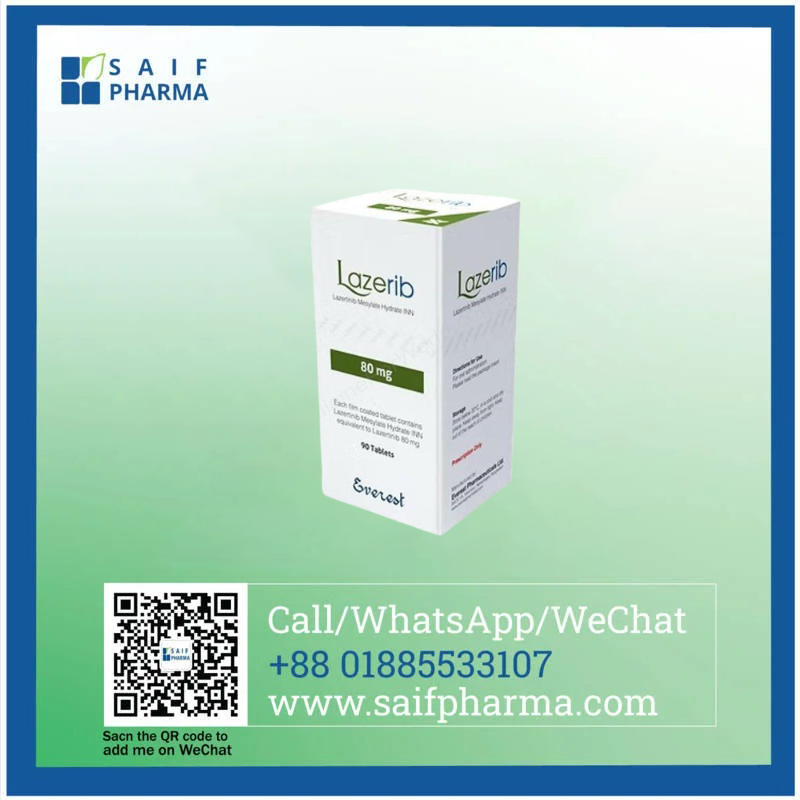
- Lazerib is available in both 80 mg and 240 mg film-coated tablet strengths; the treatment regimen is determined by the treating physician in accordance with the approved prescribing information.
- In the MARIPOSA Phase 3 trial, rash occurred in 86% of patients treated with the lazertinib-amivantamab combination, with a median onset of approximately 14 days; dose interruptions due to rash were required in 37% of patients.
- Serious adverse effects include toxic epidermal necrolysis (TEN) and impaired fertility; patients should consult the prescribing information for specific guidance on breastfeeding cessation during and after treatment.
- Lazerib, manufactured by Everest Pharmaceuticals Ltd. in Bangladesh, is available through our B2B supply network for hospital pharmacies, oncology centers, and procurement agencies serving Saudi Arabia and the broader Middle East region.
What Is Lazertinib and How Does It Work?
Lazertinib is a targeted kinase inhibitor classified as an EGFR (epidermal growth factor receptor) inhibitor, indicated for the first-line treatment of locally advanced or metastatic non-small cell lung cancer (NSCLC). Its mechanism centers on the selective inhibition of EGFR signaling pathways that drive tumor cell proliferation in patients harboring specific activating mutations. By blocking aberrant EGFR kinase activity, lazertinib disrupts downstream oncogenic signaling, thereby suppressing tumor growth at the molecular level.
Lazertinib is not administered as monotherapy. It is specifically approved for use in combination with amivantamab, a bispecific antibody targeting EGFR and MET receptors. This dual-agent approach is designed to provide broader and more durable suppression of EGFR-driven tumor activity compared to single-agent strategies, based on clinical evidence demonstrating enhanced progression-free survival outcomes in EGFR-mutant NSCLC populations.
For B2B procurement purposes, the supplied brand available through our network is Lazerib (Everest Pharmaceuticals Ltd.), a Bangladeshi-manufactured formulation of lazertinib. Procurement teams sourcing oncology medicines for the Kingdom of Saudi Arabia and the broader Middle East region can engage with us directly for availability inquiries regarding Lazerib. Understanding the mechanism and therapeutic class of lazertinib is foundational for formulary evaluation and clinical procurement decisions in institutional oncology settings.
Approved Indication: EGFR-Mutant Non-Small Cell Lung Cancer
Lazertinib carries a formally approved indication for the first-line treatment of adult patients with locally advanced or metastatic non-small cell lung cancer (NSCLC) whose tumors harbor EGFR exon 19 deletions or exon 21 L858R substitution mutations. This indication applies exclusively to use in combination with amivantamab and is not approved for use as a standalone agent in this setting.
Patient selection is critically dependent on confirmed EGFR mutation status. Prior to initiating therapy, patients must undergo validated molecular diagnostic testing to identify the presence of EGFR exon 19 deletions or the L858R point mutation in exon 21. These two mutation subtypes represent the most clinically actionable EGFR alterations in NSCLC and are the only mutations for which lazertinib in combination with amivantamab has demonstrated regulatory approval based on prospective randomized controlled trial evidence.
From a procurement and formulary perspective, this targeted indication means that lazertinib is positioned within precision oncology protocols rather than broad-spectrum chemotherapy regimens. Institutions managing EGFR-mutant NSCLC patient populations — including oncology centers and hospital pharmacies across Saudi Arabia — should evaluate Lazerib as a procurement priority within their targeted therapy portfolios. The biomarker-driven patient selection requirement ensures appropriate utilization and aligns with contemporary precision medicine standards in thoracic oncology. For context on other EGFR-targeted agents used in this disease setting, refer to our overview of Osimertinib 80 MG for EGFR-mutated NSCLC.
Clinical Evidence: MARIPOSA Trial Highlights
The clinical profile of lazertinib in combination with amivantamab is primarily supported by data from the MARIPOSA trial, a Phase 3 randomized controlled study evaluating this combination regimen in patients with EGFR-mutant locally advanced or metastatic NSCLC. The trial provided pivotal efficacy and safety data that informed regulatory submissions to the FDA, with both a supplemental biologics license application (sBLA) and a new drug application (NDA) submitted based on data from the phase 3 MARIPOSA trial for amivantamab and lazertinib in EGFR-mutant NSCLC.
From a safety standpoint, dermatologic toxicity emerged as the most frequently observed adverse event in the MARIPOSA dataset. Rash occurred in 86% of patients treated with the lazertinib-amivantamab combination, with a median onset of approximately 14 days following treatment initiation. This high incidence underscores the importance of proactive dermatologic monitoring protocols and patient counseling in clinical settings where this regimen is deployed.
Rash-related dose management was a significant clinical consideration in the trial. Dose interruptions due to rash were required in 37% of patients, dose reductions were implemented in 23% of patients, and permanent discontinuation of lazertinib due to rash occurred in 5% of patients. These figures are essential for oncology pharmacists and procurement teams to understand when assessing the real-world clinical management burden and supportive care requirements associated with this regimen.
The LASER301 trial also contributed to the broader clinical evidence base for lazertinib as an EGFR-targeted agent in first-line NSCLC, providing additional context for its efficacy profile across diverse patient populations. Collectively, this evidence supports the clinical rationale for including lazertinib-containing regimens in institutional oncology formularies, particularly in centers with established EGFR mutation testing infrastructure and dermatologic toxicity management protocols.
Dosage Forms and Administration Guidelines
Clinical Decision Authority: Dosing decisions for lazertinib must always be determined and supervised by a qualified oncologist experienced in the management of NSCLC. The following information is provided for formulary and procurement reference purposes only and does not constitute prescribing guidance.
Lazerib is available in two film-coated tablet strengths: 80 mg and 240 mg. The treatment regimen is determined by the treating oncologist in accordance with the approved prescribing information, with lazertinib used in combination with amivantamab. Treatment should be continued until disease progression or the occurrence of unacceptable toxicity, as determined by the treating physician through regular clinical and radiographic assessment.
Missed Dose Management Protocol: If a dose is missed and the patient identifies this within 12 hours of the scheduled time, the missed dose should be taken. If more than 12 hours have elapsed since the scheduled dose, the missed dose should be skipped and the patient should resume with the next regularly scheduled dose. Double dosing to compensate for a missed dose is not appropriate and may increase the risk of adverse events.
For procurement teams, understanding the available tablet strengths — 80 mg and 240 mg — is relevant for accurate order quantity planning, inventory management, and formulary stocking decisions across oncology departments in Saudi Arabian healthcare institutions. The availability of both strengths provides flexibility for dose modification protocols when clinically indicated for toxicity management.
Safety Profile: Side Effects and Risk Considerations
A thorough understanding of the lazertinib safety profile is essential for clinical teams and procurement decision-makers evaluating this agent for institutional use, particularly given the high incidence of dermatologic adverse events requiring active management.
Common adverse effects reported with lazertinib in combination with amivantamab include: rash, pruritus, dry skin, acneiform dermatitis, diarrhea, nausea, fatigue, and vomiting. Dermatologic reactions are the most prevalent category, as reflected in the MARIPOSA trial data discussed above, with rash representing the most frequent treatment-emergent adverse event.
Serious adverse effects include toxic epidermal necrolysis (TEN), severe rash necessitating dose interruption or permanent discontinuation, and impaired fertility. The risk of TEN, while uncommon, represents a potentially life-threatening dermatologic emergency requiring immediate clinical intervention and specialist dermatology consultation.
Reproductive Safety Considerations: Both male and female patients of reproductive potential should be counseled regarding the potential risk for impaired fertility associated with lazertinib. Male patients with female partners of reproductive potential are advised to use effective contraception during treatment and for a minimum of 3 weeks after the last dose, based on the drug’s elimination half-life and potential for reproductive toxicity.
Lactation: Patients should be advised not to breastfeed during treatment with lazertinib and for 3 weeks following the last dose, due to the potential risk of serious adverse reactions in breastfed infants. This recommendation is based on the drug’s physicochemical properties and potential for excretion in human milk.
Regulatory Status: FDA, EMA, and Middle East Context
Lazertinib received formal regulatory approval from both major international agencies in 2024. The U.S. Food and Drug Administration (FDA) granted approval in 2024, followed by the European Medicines Agency (EMA) also granting approval in 2024. These approvals were based on the clinical evidence package generated through the MARIPOSA Phase 3 trial and supporting studies, validating the lazertinib-amivantamab combination for first-line EGFR-mutant NSCLC through rigorous regulatory review processes.
For the Kingdom of Saudi Arabia, the relevant regulatory authority is the Saudi Food and Drug Authority (SFDA). The SFDA governs the registration, importation, and distribution of pharmaceutical products within the KSA market through comprehensive regulatory frameworks aligned with international standards. International regulatory approvals from the FDA and EMA are typically considered as part of the SFDA’s review and registration process, and institutions and procurement teams should consult current SFDA registration status for lazertinib prior to finalizing procurement decisions.
It is worth noting that Lazcluze, the originator brand of lazertinib, received its 2024 approvals through the FDA and EMA pathways referenced above. For B2B buyers operating in the Middle East, awareness of the international regulatory timeline supports informed procurement planning as regional registration processes progress through national regulatory authorities including the SFDA.
Sourcing Lazerib (Lazertinib) for the Saudi Arabian Market
We are a Bangladeshi pharmaceutical supplier specializing in the international distribution of medicines manufactured in Bangladesh. For buyers seeking a reliable lazertinib supplier serving the Kingdom of Saudi Arabia and the wider Middle East region, we offer Lazerib — a lazertinib formulation manufactured by Everest Pharmaceuticals Ltd. — as part of our oncology medicine portfolio.
Lazerib is available in both 80 mg and 240 mg film-coated tablet strengths, aligned with the standard clinical dosing requirements for EGFR-mutant NSCLC treatment protocols. Our supply chain is structured to support B2B procurement for hospital pharmacies, oncology centers, pharmaceutical distributors, and healthcare procurement agencies operating across the Gulf Cooperation Council (GCC) and broader Middle East markets.
We understand the documentation and compliance requirements associated with importing pharmaceutical products into the Saudi Arabian market, and we work with buyers to facilitate the necessary regulatory and logistical processes including certificate of analysis (CoA), certificate of pharmaceutical product (CPP), and other documentation required by the SFDA. We do not publish pricing on this platform; all pricing and availability inquiries are handled directly through our procurement team to ensure accurate, current information tailored to specific order requirements.
Contact us directly to discuss availability, minimum order quantities, and supply terms for Lazerib for your KSA or Middle East procurement requirements.
Why Partner With Us for Oncology Medicine Procurement?
Our core competency is the international B2B supply of Bangladeshi-manufactured pharmaceutical products to healthcare buyers in the Middle East and beyond. We bring focused expertise in oncology medicine procurement, with a portfolio that includes targeted therapies such as Lazerib for EGFR-mutant NSCLC.
Partnering with us means access to a streamlined procurement process, regulatory documentation support, and a supply network built around the specific compliance requirements of markets like Saudi Arabia. We assist buyers in navigating import documentation, product certification, and order fulfillment logistics with established protocols for pharmaceutical cold chain management and quality assurance throughout the distribution process.
Our team is experienced in serving hospital procurement departments, pharmaceutical wholesalers, and institutional buyers across the GCC. Whether you are evaluating Lazerib for formulary inclusion or require a consistent supply channel for ongoing patient treatment programs, we are equipped to support your procurement objectives with reliable supply continuity and responsive customer service.
Reach out to our procurement team today to request availability information, documentation packages, or to initiate a supply inquiry for Lazerib or other oncology medicines within our portfolio.
Frequently Asked Questions
What mutations must a patient have to be eligible for lazertinib treatment?
Patients must have confirmed EGFR exon 19 deletions or exon 21 L858R substitution mutations in their tumor, identified through validated molecular diagnostic testing before therapy begins; these are the only two mutation subtypes for which lazertinib in combination with amivantamab has received regulatory approval for first-line NSCLC treatment based on prospective clinical trial evidence demonstrating clinical benefit in these specific molecular subgroups.
What are the most common side effects of lazertinib?
The most frequently reported adverse effects include rash, pruritus, dry skin, acneiform dermatitis, diarrhea, nausea, fatigue, and vomiting; dermatologic reactions are the most prevalent category, with rash occurring in 86% of patients in the MARIPOSA trial, and serious reactions such as toxic epidermal necrolysis (TEN) require immediate clinical attention and may necessitate permanent treatment discontinuation.
What should a patient do if they miss a dose of lazertinib?
If the missed dose is identified within 12 hours of the scheduled time, the patient should take it; if more than 12 hours have passed, the missed dose should be skipped and the next regularly scheduled dose taken as planned — double dosing to compensate is not appropriate and may increase the risk of adverse events without providing additional therapeutic benefit.
Is lazertinib safe to use during breastfeeding or for patients concerned about fertility?
Patients should not breastfeed during lazertinib treatment or for 3 weeks after the last dose due to the potential risk of serious adverse reactions in breastfed infants; both male and female patients of reproductive potential should also be counseled about the risk of impaired fertility, and male patients with female partners of reproductive potential are advised to use effective contraception during treatment and for at least 3 weeks after the last dose based on the drug’s elimination profile.
Which brand of lazertinib do you supply, and where is it manufactured?
We supply Lazerib, a lazertinib formulation manufactured by Everest Pharmaceuticals Ltd. in Bangladesh, available in 80 mg and 240 mg film-coated tablet strengths; we do not source or distribute brands manufactured outside Bangladesh, ensuring supply chain consistency and quality assurance through our established manufacturing partnerships.
Can you supply Lazerib to hospital pharmacies and oncology centers in Saudi Arabia?
Yes, our B2B supply network is structured to serve hospital pharmacies, oncology centers, pharmaceutical distributors, and healthcare procurement agencies operating in Saudi Arabia and across the broader GCC and Middle East region; contact our procurement team directly to discuss availability, minimum order quantities, regulatory documentation requirements, and supply terms tailored to your institutional procurement needs.
Access This Medicine Through Saif Pharma
We are a specialist oncology medicine supplier delivering to patients, pharmacies, hospitals, and distributors worldwide. Contact us for availability and sourcing support.
We do not publish prices online. All pricing is provided directly by our specialist supply team on request.
Medical Information Notice: This content is for informational purposes only and is based on official pharmaceutical product documentation. It does not constitute medical advice. Patients should consult their doctor or pharmacist before taking any medication.
Regulatory Disclaimer: Sourcing and distribution are subject to regional import regulations, quotas, and verified medical prescriptions where applicable. Pricing and availability are subject to change without notice.
Content Currency: This article was last reviewed and updated in June 2026. Regulatory approval statuses and product availability are subject to change; readers are advised to consult official regulatory databases for the most current information.