



Overview
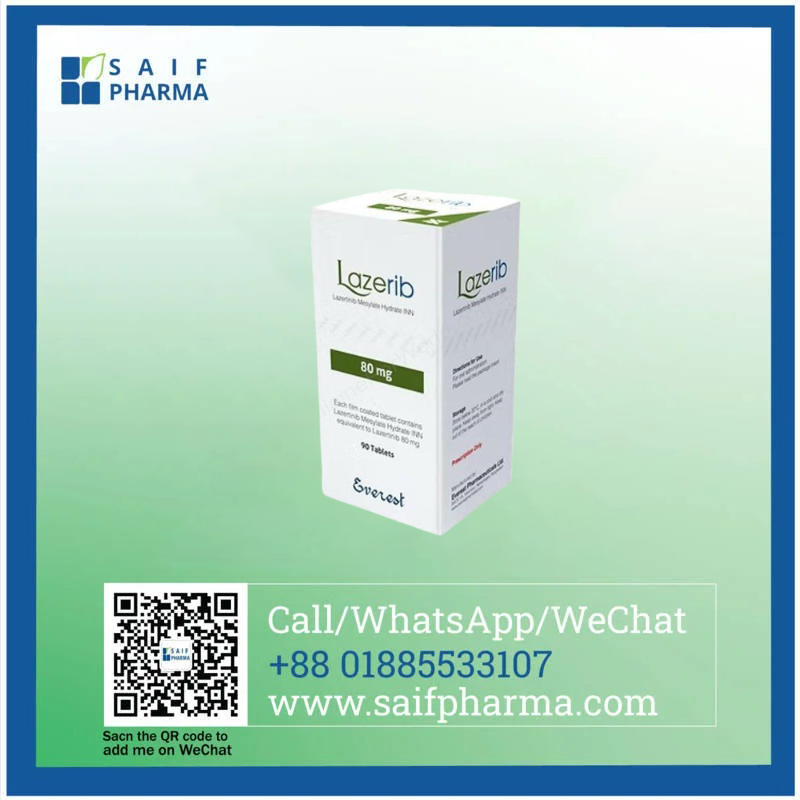
Lazerib 80 mg contains Lazertinib, an oral, third-generation, irreversible epidermal growth factor receptor (EGFR) tyrosine kinase inhibitor (TKI). Manufactured by Everest Pharmaceuticals Ltd. and supplied by Saif Pharma, Lazerib is specifically engineered to target both sensitizing EGFR mutations and the T790M resistance mutation in non-small cell lung cancer (NSCLC). Its highly selective nature allows it to spare “wild-type” (healthy) EGFR, significantly reducing side effects like rash and diarrhea. Notably, Lazerib is designed with exceptional blood-brain barrier (BBB) permeability, making it a vital option for patients with brain metastases.
Therapeutic Applications
Lazerib is primarily indicated for:
First-Line Treatment of EGFR-Mutant NSCLC: For adult patients with locally advanced or metastatic NSCLC harboring EGFR exon 19 deletions or exon 21 L858R substitution mutations.
Second-Line Treatment (T790M+): For patients with metastatic EGFR T790M mutation-positive NSCLC whose disease has progressed on or after prior EGFR TKI therapy.
Management of CNS Metastases: Due to its superior penetration into the central nervous system, it is highly effective for patients whose lung cancer has spread to the brain.
Mechanism of Action
Lazertinib works by irreversibly binding to the intracellular kinase domain of the mutated EGFR protein.
Mutant Selectivity: It specifically inhibits mutated forms of EGFR (including T790M) that signal cancer cells to grow uncontrollably.
Sparing Healthy Cells: By avoiding the wild-type EGFR found in healthy skin and gut tissues, Lazerib minimizes the toxicities commonly associated with first and second-generation TKIs.
Interrupting the Signal: By blocking these receptors, Lazerib halts the downstream signaling pathways, leading to tumor cell death (apoptosis).
Pharmacokinetic Profile
Absorption: Reaches peak plasma concentration within a few hours of oral dosing.
Distribution: Features a high volume of distribution with significant penetration into the cerebrospinal fluid (CSF).
Metabolism: Primarily metabolized in the liver via CYP3A4.
Elimination: Mainly excreted via feces, with a half-life that supports convenient once-daily dosing.
Dosage & Administration
Standard Adult Dose: The recommended dose is 240 mg once daily (three 80 mg tablets).
Instructions: Tablets should be swallowed whole with water. Do not crush, chew, or split. It can be taken with or without food.
Dose Adjustments: If significant toxicity occurs, the dose may be reduced to 160 mg or 80 mg daily as directed by an oncologist.
Clinical Considerations & Safety
Venous Thromboembolism (VTE): Patients should be monitored for signs of blood clots, especially when used in combination with other targeted therapies.
Interstitial Lung Disease (ILD): Monitor for new or worsening respiratory symptoms (cough, fever, shortness of breath).
Dermatologic Toxicity: While more selective, it can still cause mild rash, dry skin, or nail infections (paronychia).
QT Prolongation: Periodic ECG monitoring may be required to check heart rhythm.
Special Populations
Pregnancy: Lazertinib may cause fetal harm; effective contraception is required during and shortly after treatment.
- Hepatic Impairment: Use with caution in patients with moderate to severe liver dysfunction.