




Overview
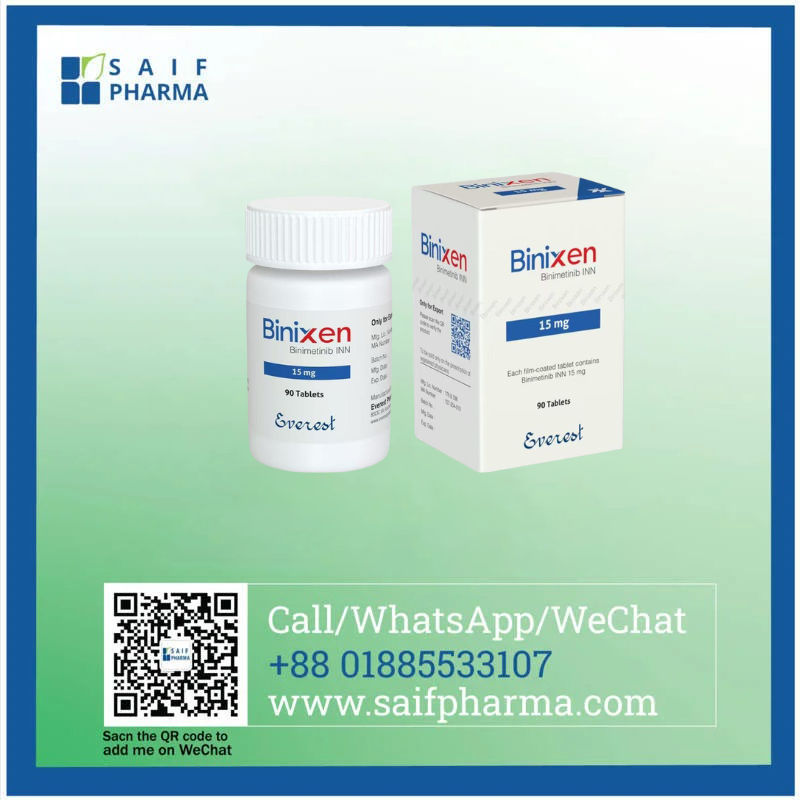
Binixen 15 mg contains Binimetinib, a potent and selective inhibitor of mitogen-activated extracellular signal-regulated kinase 1 and 2 (MEK1 and MEK2). Developed by Everest Pharmaceuticals Ltd. and supplied globally by Saif Pharma, Binixen is a targeted therapy designed to disrupt the signaling pathways that drive cancer cell growth. It is primarily used in combination with Encorafenib to treat patients with advanced cancers harboring specific genetic mutations, particularly the BRAF V600E or V600K mutations.
Therapeutic Applications
Binixen is indicated for the following conditions when used in combination with Encorafenib:
Unresectable or Metastatic Melanoma: For adult patients with skin cancer that has spread or cannot be removed by surgery, specifically those with a confirmed BRAF V600E or V600K mutation.
Metastatic Non-Small Cell Lung Cancer (NSCLC): For adult patients whose lung cancer has spread and carries the BRAF V600E mutation.
Mechanism of Action
Binimetinib belongs to a class of drugs known as MEK inhibitors. In many cancers, the MAPK/ERK pathway—a communication route within cells—becomes overactive due to mutations like BRAF. This causes cells to grow and divide uncontrollably. Binimetinib works by binding to and blocking MEK1 and MEK2 proteins. By silencing these “messengers,” the drug cuts off the growth signals, which can lead to tumor shrinkage, slower disease progression, and increased survival rates.
Pharmacokinetic Profile
Absorption: Binixen is orally active and typically reaches peak plasma concentrations quickly. It has approximately 50% oral bioavailability.
Metabolism: Primarily metabolized via the UGT1A1 enzyme pathway, with a minor contribution from CYP enzymes (CYP1A2 and CYP2C19).
Elimination: The drug has a relatively short half-life of approximately 1.5 hours, with elimination occurring through both feces (62%) and urine (31%).
Dosage & Administration
Standard Adult Dose: The recommended dose is 45 mg (three 15 mg tablets) taken orally twice daily, approximately 12 hours apart.
Administration: Tablets should be swallowed whole with water. They can be taken with or without food.
Vomiting/Missed Doses: If a patient vomits after taking a dose, they should not take an extra dose. If a dose is missed, it should only be taken if the next scheduled dose is more than 6 hours away.
Clinical Considerations & Safety
Binixen requires professional medical supervision and regular monitoring of heart, eye, and liver function.
Cardiomyopathy: Can cause a decrease in Left Ventricular Ejection Fraction (LVEF). Heart function should be assessed before and during treatment.
Ocular Toxicities: Risks include Serous Retinopathy, Retinal Vein Occlusion (RVO), and Uveitis. Patients should report any blurred vision or vision loss immediately.
Hepatotoxicity: Liver enzyme levels (ALT/AST) should be monitored, as elevations are common.
Rhabdomyolysis: Monitor Creatine Phosphokinase (CPK) levels, especially if the patient experiences muscle pain or weakness.
Venous Thromboembolism: Patients are at an increased risk for deep vein thrombosis (DVT) and pulmonary embolism.
Special Populations
Pregnancy: Binimetinib can cause fetal harm. Effective non-hormonal contraception is required during treatment and for at least 30 days after the final dose.
Lactation: Breastfeeding is not recommended during treatment and for 3 days after the last dose.
Hepatic Impairment: Dose adjustments may be necessary for patients with moderate to severe liver dysfunction.